© RUB
SFB1491 congratulates Francis Halzen on the 2026 Nobel Prize in Physics
Congratulations, Francis Halzen!
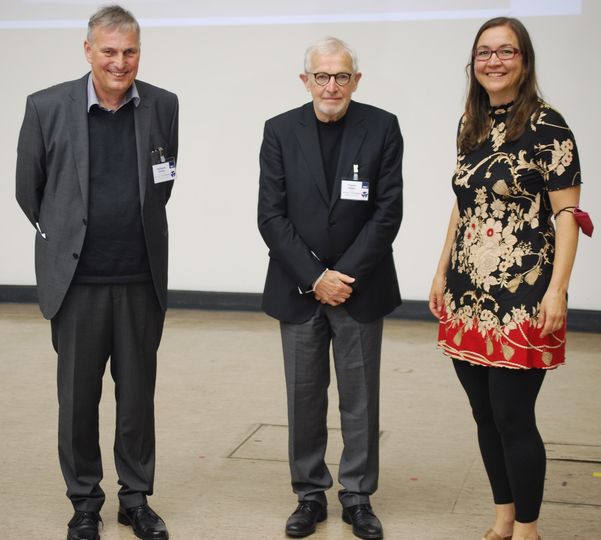
SFB1491 - Cosmic Interacting Matters warmly congratulates our longstanding colleague, friend, and supporter Francis Halzen on receiving the 2026 Nobel Prize in Physics for his decisive contributions to the IceCube Neutrino Observatory and the discovery of high-energy neutrinos of astrophysical origin.
For our research community, this Nobel Prize holds special significance. Francis has been an international partner of the RAPP Center since its beginnings, a valued supporter of SFB1491, and a collaborator of our scientists for more than 20 years. In 2022, he received an honorary doctorate from Ruhr University Bochum.
We are especially proud that one of SFB1491’s key research results - the discovery of the Milky Way in neutrinos - was achieved in close collaboration with Francis Halzen.
All of us at SFB1491 extend our heartfelt congratulations on this well-deserved recognition!
Watch the video about the discovery of the Milky Way in neutrinos.
© Jeremiah Lübke
Featured Article Colloquium: Cosmic-ray transport in magnetic turbulence
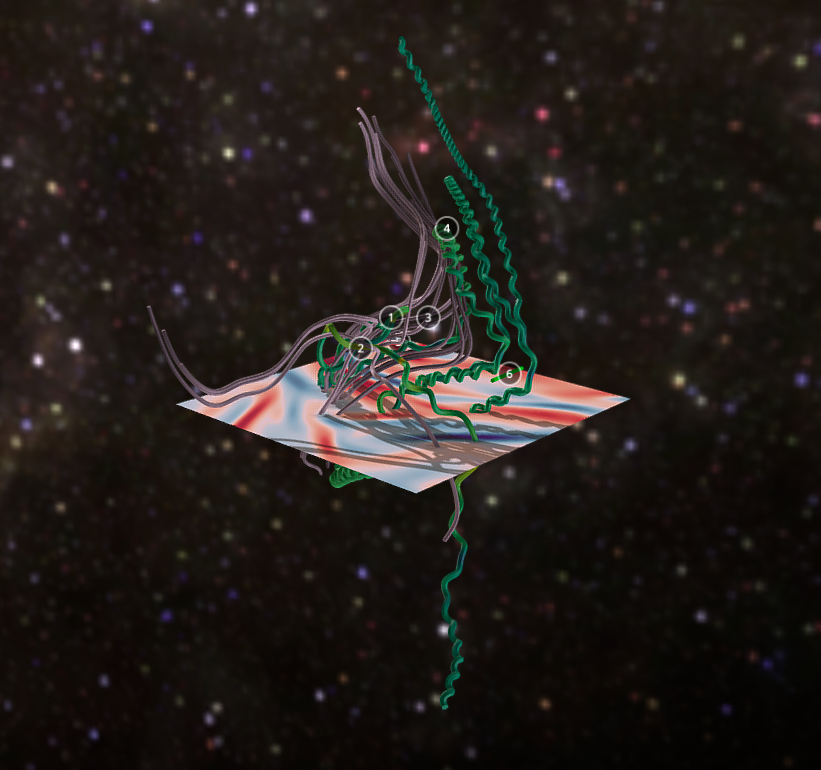
We are pleased to share that the article “Modelling cosmic-ray transport: magnetised versus unmagnetised motion in astrophysical magnetic turbulence”, published in the Journal of Plasma Physics, has been selected as a Featured Article.
As part of this recognition, Jeremiah Lübke will give an invited online colloquium in the JPP Frontiers of Plasma Physics Colloquium series.
The talk will explore how cosmic rays propagate through strong astrophysical magnetic turbulence, with a focus on magnetised motion, magnetic mirroring, field-line curvature, and unmagnetised scattering.
📅 Thursday, July 30, 2026
⏰ 5:00 p.m.
🌐 Online via Cassyni
🗣️ Language: English
Register here:
https://cassyni.com/events/2JM5hBXyoXr8CgcNfXehZw
© SFB1491
Open PhD positions
Wanted: PhD Students
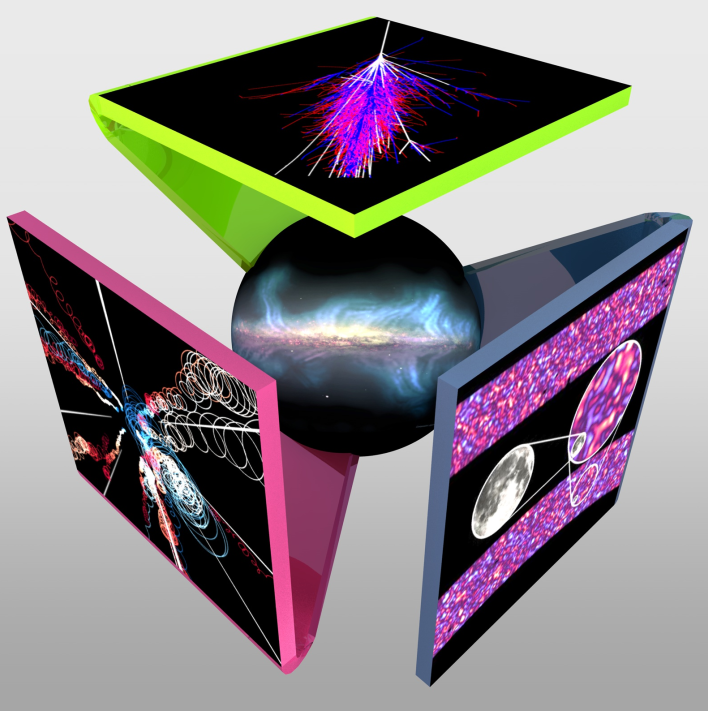
The Collaborative Research Center 1491 is searching for up to 20 PhD students in Astrophysics, Astroparticle Physics, Cosmology, Plasma Physics, and Particle Physics.
The CRC1491 “Cosmic Interacting Matters – From Source to Signal” searches for several research associates (E13, 75%) at the earliest possible date. The positions include the opportunity to pursue a doctorate.
Research: The SFB covers a broad variety of topics, ranging from astrophysical observations of active and starburst galaxies to theoretical calculations of shock acceleration, cosmology, dark matter searches, and studies of hadronic interactions.
There are theory projects as well as projects focused on data analysis with different observatories, for example IceCube, CTAO, LOFAR, and Auger, as well as experiments such as LHCb. More information on the research topics can be found on the SFB1491 projects page .
Workplace: The positions are located at Ruhr-Universität Bochum, Technische Universität Dortmund, and Bergische Universität Wuppertal.
Applications
Please apply via the individual application links:
Bochum:
Application portal Ruhr-Universität Bochum
Dortmund:
Announcement TU Dortmund University
Wuppertal:
Job portal Bergische Universität Wuppertal
— Job-ID 26142
Period of employment: 3 years
Application deadline: Please see the individual announcements
Contacts
Prof. Dr. Julia Tjus, Ruhr-Universität Bochum
julia.tjus@rub.de
Prof. Dr. Wolfgang Rhode, TU Dortmund University
wolfgang.rhode@tu-dortmund.de
Dr. Lukas Merten, Bergische Universität Wuppertal
merten@uni-wuppertal.de
© SFB1491
SFB1491 receives funding for another four years
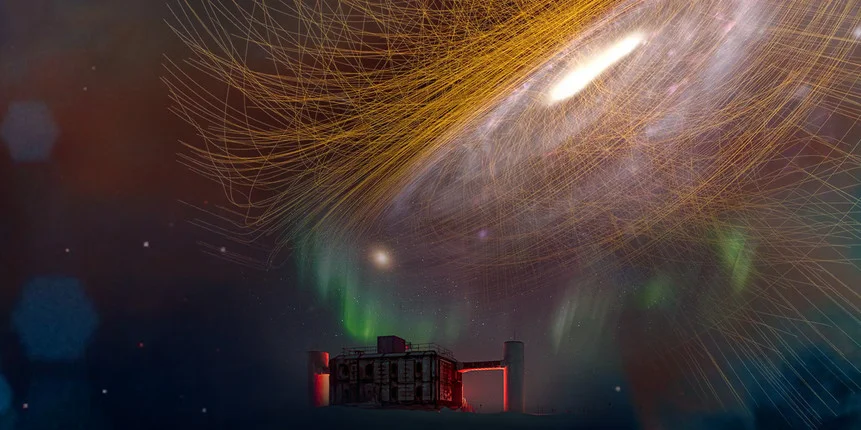
The Collaborative Research Centre 1491 “Cosmic Interacting Matter” will receive funding for another four years. The German Research Foundation has approved the continued funding of the CRC, led by spokesperson Prof. Dr. Julia Tjus at Ruhr University Bochum, from 1 July 2026. There is a lot going on in the sky: stars are born and die, charged particles, radiation and neutrinos collide and influence one another. The Collaborative Research Centre has been investigating these interactions in the Universe since 2022. The team studies previously unexplored connections between different energies and particles in space: from cosmic rays, gamma rays, and neutrinos to turbulent electromagnetic fields.
Uncovering mechanisms of origin
“While our understanding of the fundamental building blocks of matter is already well established, the specific interactions responsible for multimessenger emissions from galaxies across a broad range of energies and particle species remain an important research question,” says Julia Tjus.
By combining investigations of cosmic radiation with experiments in particle physics, the team of the Collaborative Research Centre aims to uncover the mechanisms by which high-energy particles, gamma rays and neutrinos are produced. Computer-aided modelling is also intended to illuminate the interplay between charged particles and turbulent electromagnetic fields at the plasma level.
Questions about dark matter
Since visible matter also makes up only one fifth of the Universe, understanding the nature of dark matter remains one of the greatest challenges of modern science. “Four years ago, we began working on a unified description of interacting cosmic matter and brought together scientists from the fields of particle, plasma and astrophysics to address three central scientific questions,” says Julia Tjus:
- What interactions exist between magnetized, turbulent astrophysical plasmas and cosmic radiation, and what conclusions can be drawn from them about the origin of cosmic rays?
- How do precision measurements of particle interactions help us understand the astrophysical signatures of cosmic radiation?
- What connections exist between the signatures of visible and dark matter?
In the first funding phase, global structures were developed and tested using individual examples. In the second funding phase, the focus will be on the quantification and systematization of these framework concepts. “Building on the results of the past four years, we will further expand our approach to developing methods for bridging boundaries in order to answer our fundamental questions in the coming years,” says Julia Tjus.
© Sam Taziaux
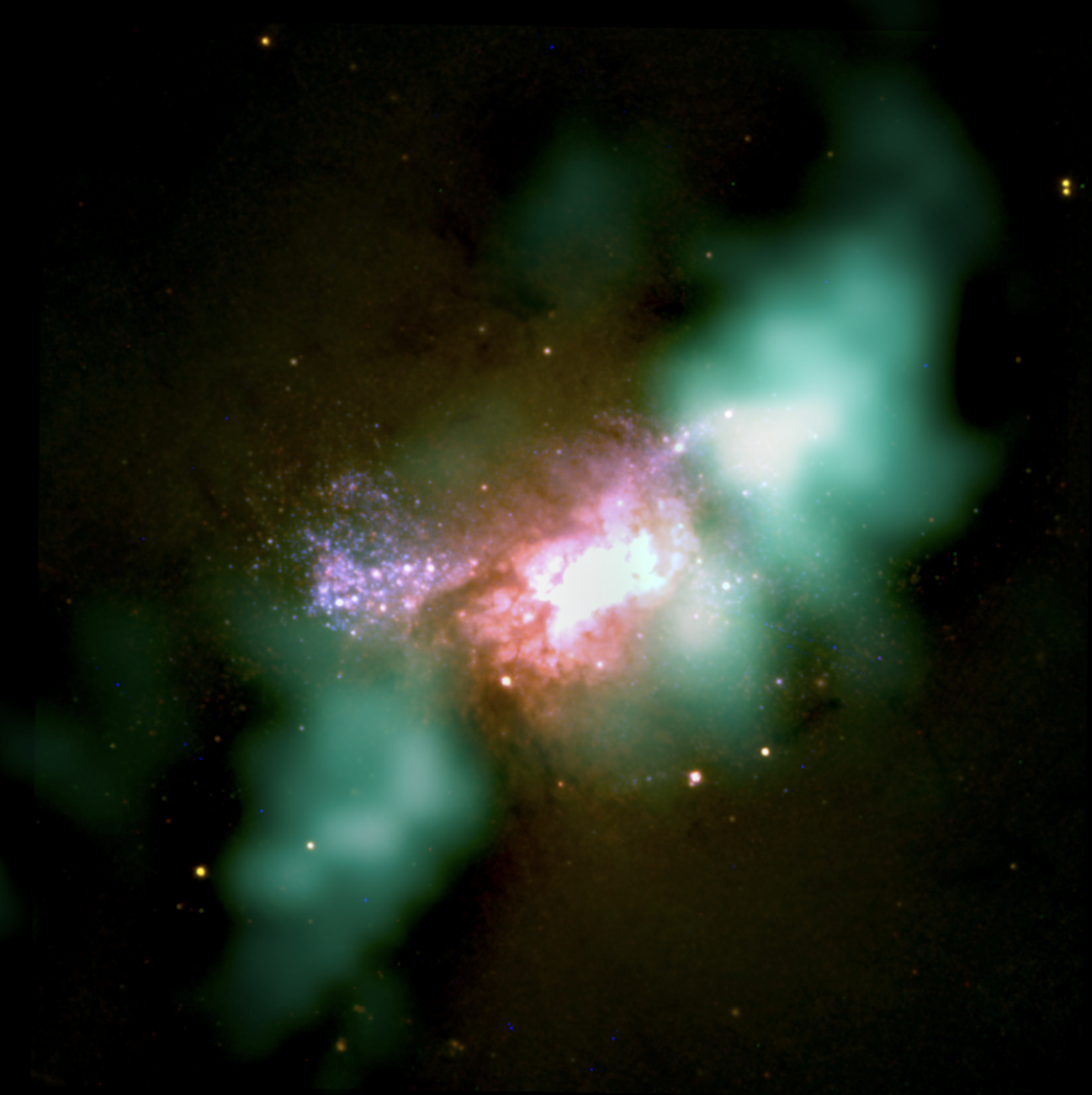
Public lecture "Die unsichtbare Macht im All – Magnetfelder in Zwerggalaxien"
We are pleased to invite you to the public lecture
“Die unsichtbare Macht im All – Magnetfelder in Zwerggalaxien” (in German).
Sam Taziaux will take you on a journey through space, exploring the magnetic fields of the Universe and how they shape galaxies. The lecture focuses in particular on dwarf galaxies, the smallest and most common type of galaxies, which nevertheless play a key role in the formation and evolution of larger cosmic structures.
When: 20.05.26 at 20:00
Where: Planetarium Bochum
For registration and further information, please have a look at the Planetarium’s homepage.